Lady Laura Barton
Partners in CrimeLady Laura Barton is a titled guest whose social standing opens the doors of wealthy households—and whose history of unexplained thefts turns that access into a source of suspicion. In the Pink Pearl inquiry, Tuppence uncovers a pattern implicating Lady Laura in petty pilfering, yet judges that she probably did not take the valuable jewel itself.
Identity and Background
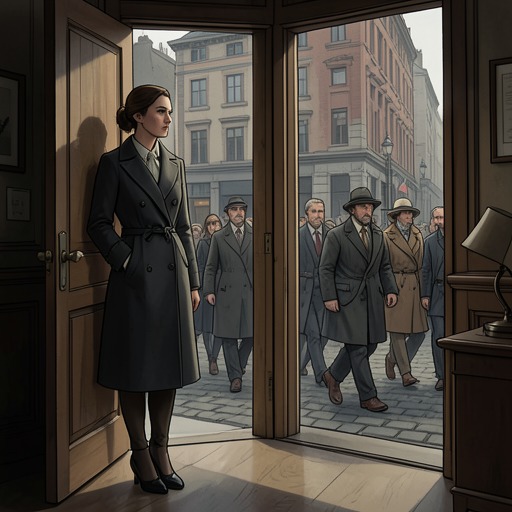
Lady Laura is the daughter of the late Earl of Carrowway and the sister of the current earl, whose recent speech in the House of Lords is mentioned as a point of family distinction. Colonel Kingston Bruce describes her as an old and dear friend staying at his house. Her title also makes her an attractive guest to the Hamilton Betts, American visitors eager to meet her; the Colonel remarks that Americans are interested in titles, and Tommy replies that they are not alone.
The Pattern of Theft
While investigating the disappearance of the Pink Pearl from Mrs. Hamilton Betts’s pendant, Tuppence learns from the French maid that Lady Laura had stayed at the Kingston Bruces’ a year earlier. After returning from tea with their friends, a teaspoon fell from Lady Laura’s muff. The household treated it as an accidental loss, but the incident takes on a different cast when set beside other reports Tuppence gathers.
Lady Laura, Tuppence learns, stays frequently with other people and has little money of her own. Tuppence suspects that she seeks comfortable accommodation among hosts for whom a title still carries weight. More troublingly, five distinct thefts have occurred while Lady Laura was staying in various houses. The stolen objects ranged from trivial items to valuable jewels. The teaspoon is thus not an isolated curiosity: it belongs to a recurring pattern that makes Lady Laura a plausible suspect wherever she is a guest.
The Pink Pearl Inquiry
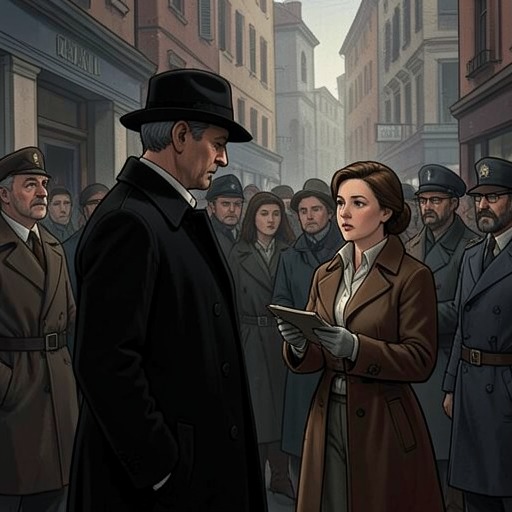
At the Kingston Bruces’ house, the pearl had been wrenched from a pendant left on a small table after its clasp broke during an evening of bridge. Tuppence does not dismiss the evidence against Lady Laura, but she separates her suspected habit of concealing small articles from the central crime. After lunch, Lady Laura asks how the inquiry is proceeding. Tuppence emphasizes suspicion of the parlourmaid, yet privately feels fairly sure that Lady Laura has not taken the Pink Pearl.
That distinction keeps the case from collapsing into a simple equation between past misconduct and the present theft. Lady Laura’s record makes her worth watching, but it does not, in Tuppence’s judgment, explain the removal of an exceptionally valuable jewel. The investigation therefore treats her as a source of suspicion without treating the suspicion as proof.
Social Position and Narrative Role
Lady Laura’s circumstances expose the practical value—and the limits—of aristocratic status. Her title helps secure invitations and comfortable stays despite her lack of money, while the repeated thefts place those same visits under scrutiny. The contrast is especially sharp in a household where the jewel belongs to an American guest specifically invited to meet a titled woman: social prestige brings the characters together, but it also creates the conditions in which access and suspicion overlap.
In the mystery, Lady Laura functions as a misleadingly strong lead. A theft apparently connected to her presence at several houses gives the detectives a reason to investigate her, but Tuppence’s measured assessment prevents that pattern from becoming a premature solution to the Pink Pearl’s disappearance.